What participants and families can do now to prepare for plan discussions, reassessments and changing support needs.
 Download Easy Read version here
There has been a lot of talk about NDIS reform, and it can be hard to know what really matters right now and what’s going to affect the lives of people with disabilities in the years to come while this is being rolled out.
People with disabilities are being asked to provide more evidence along with their motivation (documented reasons) for why their supports are reasonable, necessary, and help them work towards achieving their NDIS goals.
While the Scheme continues to change, one practical step remains useful: keep clear, current evidence of how your disability affects everyday life and the support you or the person you’re supporting needs.
While being prepared is important, this does not guarantee a particular funding decision. It does, however, give the NDIA the information it needs to consider your individual situation against NDIS funding criteria. It’s important to show that the NDIS goals that you’ve expressed desire to achieve are being worked towards.
A quick look at the NDIS reform timeline
|
DATE |
WHAT CHANGED |
|
October 2024 |
Changes began across access, planning, funding periods and the way NDIS funds may be used. |
|
1 July 2026 |
Mandatory registration and new claim arrangements commenced for SIL providers. |
|
18 August 2026 |
The next reform legislation passed Parliament. Further details will continue through rules, consultation and implementation. |
|
27 August 2026 |
New NDIS rules introduced affecting how plans are reviewed, how records must be kept, and how providers operate, with a stronger focus on compliance, fraud prevention and sustainability. |
|
1 October 2026 |
Existing unregistered SIL providers must have applied for registration to continue delivering SIL during the transition. |
What makes evidence useful?
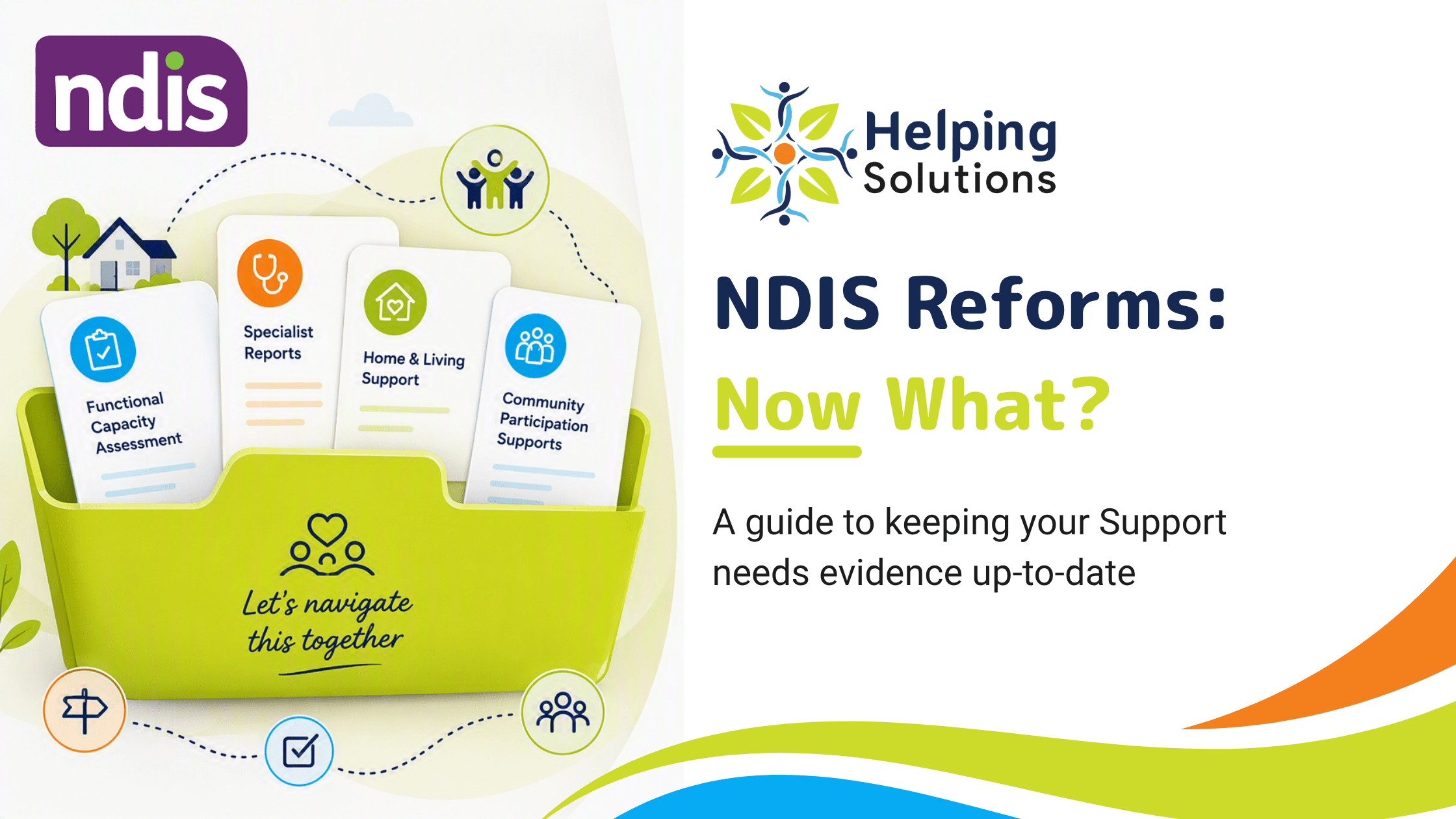
The NDIS says evidence should be recent, personal to you and prepared by an appropriate qualified professional (Occupational Therapist, Paediatrician, Speech Therapist, Pyschologist). Useful reports clearly connect your disability to its functional impact, your goals, and the support being recommended.
- Explain what you can do independently, what you can do with prompting or assistance, and what you cannot do safely without support.
- Describe how often help is needed, how long it is needed for, and what may happen if the support is not available.
- Include changes since your last plan, assessment or report.
- Show how the recommended support relates to your disability and goals, and why it is likely to be effective and beneficial.
- Shows that you’re working towards those goals with the supports you’re accessing
- Explain the informal, community and mainstream supports already available, including any limits on what family or friends can reasonably provide.
Reports that may help
The right professional depends on your disability and the decision being considered. Evidence may come from a GP, paediatrician, occupational therapist, psychologist, psychiatrist, speech pathologist, physiotherapist or another relevant treating professional. An occupational therapy functional capacity assessment can be helpful when it describes daily tasks, safety, supervision, communication, mobility, self-care and participation. For children, an updated paediatric or developmental assessment may help explain current functional impacts and treatment needs.
Evidence for different supports
Community access and participation
- The activities or goals the person wants to pursue and the disability-related barriers that prevent independent participation.
- The type of assistance required, such as prompting, communication help, transport-related support, skill-building, or support to participate safely.
- How often support is needed and the expected benefit, such as increased independence, confidence, social connection, study, volunteering or employment participation.
- Why ordinary community options or informal supports are not enough on their own.
In-home and daily living support
- Support needed with personal care, meals, household tasks, routines, medication, mobility, communication or safety.
- What happens on a typical day, including the time, frequency and level of assistance required.
- Any risks, falls, incidents, missed meals, hygiene concerns or other consequences when support is unavailable.
- Whether the goal is maintenance, independence, skill development or preventing a decline in function.
Home and living or SIL
For home and living requests, the NDIS specifically asks for recent evidence from a relevant treating professional, such as an occupational therapist. It should explain daily support and housing needs, how often and when assistance is required, functional impacts, and what other options have been explored and why they do not meet disability-related needs. If circumstances have changed, evidence should be dated after the last plan was approved and describe the change in functional capacity and daily support needs.
What should the report cover?
- Current functional capacity across the areas relevant to the request.
- Tasks completed independently, with support, or not safely completed.
- The exact type, frequency and timing of assistance required.
- Changes since the previous plan or assessment.
- Risks and likely consequences if assistance is not provided.
- The participant’s goals and the expected outcome of the recommended support.
- Other supports already available and why they do not fully meet the
disability-related need. - Incident reports highlighting the need for increased supports and/or change in supports
Useful NDIS resources
Not sure where to start?
We hope this information has been helpful. If you have concerns about your supports speak with your Helping Solutions coordinator about recent changes, upcoming plan discussions, and the records that may help describe your current support needs. We can help you organise what you already have and identify questions to take to your health professionals or the NDIA. We cannot guarantee NDIS funding outcomes or write clinical evidence on behalf of a treating professional.
Phone: 1300 905 166
Email: hello@helpingsolutions.com.au
Sources
Information checked against official NDIS and Australian Government resources current as of 24 August 2026. When preparing for a plan change or review, confirm requirements for your individual circumstances with the NDIA or your my NDIS contact.
- NDIS: How to gather evidence
- NDIS: What is reasonable and necessary
- NDIS: How to ask for home and living supports
- NDIS: What is supported independent living
- NDIS: Changes to the NDIS
- NDIS: Summary of legislation changes
- Department of Health: 2026 NDIS legislation changes
- NDIS Commission: Mandatory registration