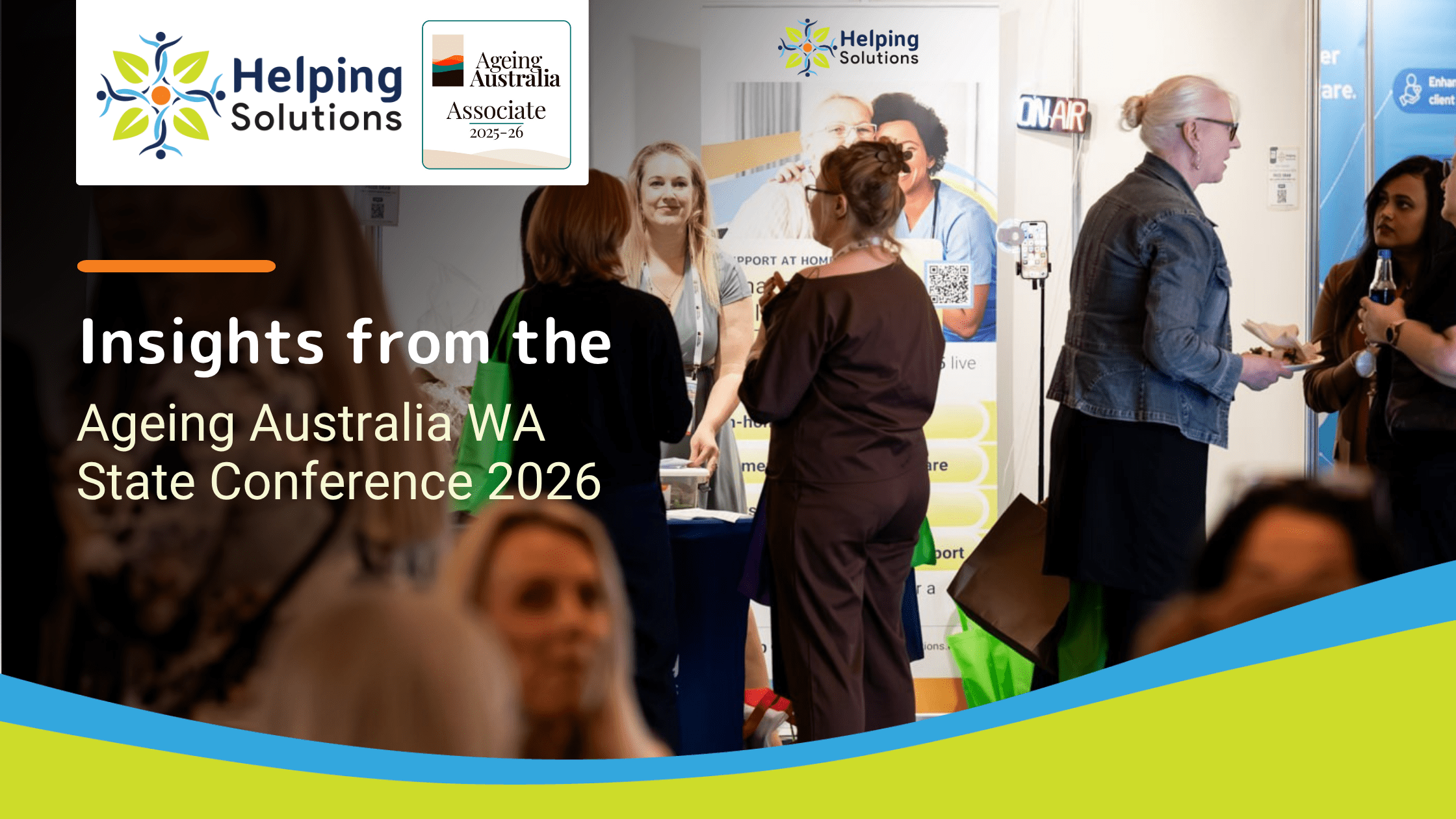
On 3 – 5 June, team members from Helping Solutions, part of the Xanadu Group family of care and community service organisations, attended the Ageing Australia WA State Conference 2026. This was a major, state‑focused event that brought together Western Australian aged care providers, sector leaders, policymakers and innovators.
It was a genuine pleasure to meet so many people who care deeply about getting aged care right, and to swap honest stories about where the sector’s heading.
Other than the impeccable dance moves on the floor of the Gala Dinner, and beyond the conversations at our booth, the program gave us plenty to think about, all under this year’s theme, People, Purpose, and Progress.
Plenty of conversations stuck with us long after the event, and we wanted to share some of the highlights.
The new Aged Care Act is settling in
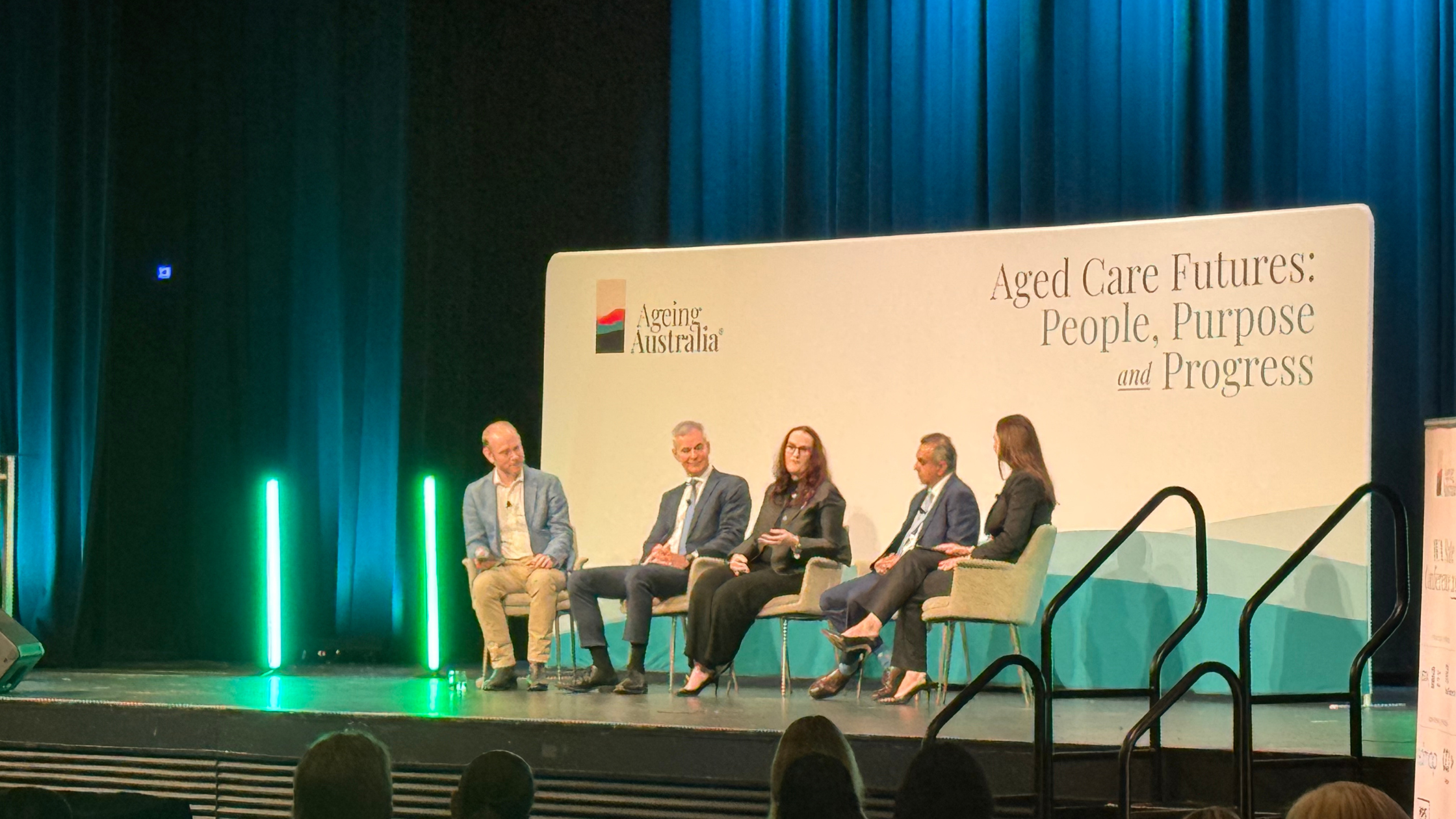
The sector panel at the Ageing Australia WA State Conference 2026 was candid about life since the new Aged Care Act commenced last November.
The changes implemented have been a welcome shift toward a rights-based, person-centred model, and have included changes such as turning principles into enforceable compliance obligations, introducing a new risk-based regulatory framework, and driving better outcomes through the Strengthened Quality Standards.
However, real friction regarding admin (particularly the My Aged Care / Services Australia interface) and, for WA in particular, the ever-present strain of distance when travel isn’t funded for remote areas remains prevalent.
Ten leadership quotients of modern leadership
Emeritus Professor Gary Martin (AIM WA) argued that IQ (Intellectual Quotient) and EQ (Emotional Quotient) aren’t enough anymore.
Intellectual Quotient refers to a leader’s ability to think critically, reason logically, understand complex information, and make sound decisions.
IQ is considered an essential skill among leaders. With IQ, you may be able to make decisions, but without the other pieces, you may struggle to get people to follow them.
The same goes for Emotional Quotient, which refers to the ability to recognise, understand, and influence emotions to build strong relationships, make better decisions, and lead people effectively.
With EQ, you’re easily likable, but will struggle to lead effectively.
Professor Gary Martin shared that leaders now need everything from an Adaptability Quotient to a Trust Quotient to a Wellbeing Quotient (all of which can be read about here). His point on wellbeing in particular landed hard in a room full of carers: you can’t pour from an empty cup.
Risk as a tool for strength
The standout for many attending the Ageing Australia WA State Conference 2026 was the fireside chat on dementia-care models in the Netherlands and Norway.
Hearing about the use of uneven paths to build balance, unlocked doors and residents involved in daily life helped us consider different and better ways of delivering quality support to individuals.
The Netherlands and Norway have developed a philosophy built on autonomy and dignity rather than risk containment. The biggest barrier, the panel noted, isn’t design or funding; it’s mindset.
These advancements in care have already started appearing in Australia, with the development of the Korongee Dementia Village in Tasmania being one of the first to adapt this new model of care, as well s Emmaus Village in New South Wales and New Direction Bellmere in Queensland.
The best part about the Support at Home model (especially for those who don’t require a dementia-tailored environment) is that it enables individuals across WA to engage in life in the same ways, with the level of support that they want to have.
Individuals can stay connected to their communities, make the same level of decisions each day, and safely take themselves to regular clubs, activities and outings of their choice (surrounded by friends and loved ones that they’ve known for years).
Workforce, to be reframed as partnership
The team at Above and Beyond Group made the case that the staffing pipeline is built through partnerships.
Things like RTO tie-ups for the Certificate III in Individual Support, earlier and better-supported work placements, and a clear career pathway people can actually see (e.g. start as a nurse, move to leading a team of carers, then managing a site) will motivate and support workforce retention in the aged care sector.
Grayce from Yaandina explained the regional reality to a member of our team in a focus group: funded site visits should be a mandatory part of induction, so staff heading to remote sites know exactly what they’re walking into.
We couldn’t agree more—it’s so common in other sectors (like mining and even the police force) to expect to be placed on site, in regional and rural communities, in the early years of your career. This often leads to challenges of not knowing how to adjust and balance the lifestyle long-term.
In order for staff to want to commit to working on site (and for them to have a clear vision for why they’re doing it and what they’re working towards, long term) then setting expectations, outlining career pathways and building valuable partnerships is key to increasing that workforce retention.
We thoroughly enjoyed these conversations, and we hope these insights and recaps were valuable for you as well. We’re looking forward to next year’s Ageing Australia conference, but in the meantime, the Helping Solutions team will be putting all the valuable knowledge we learned into practice.