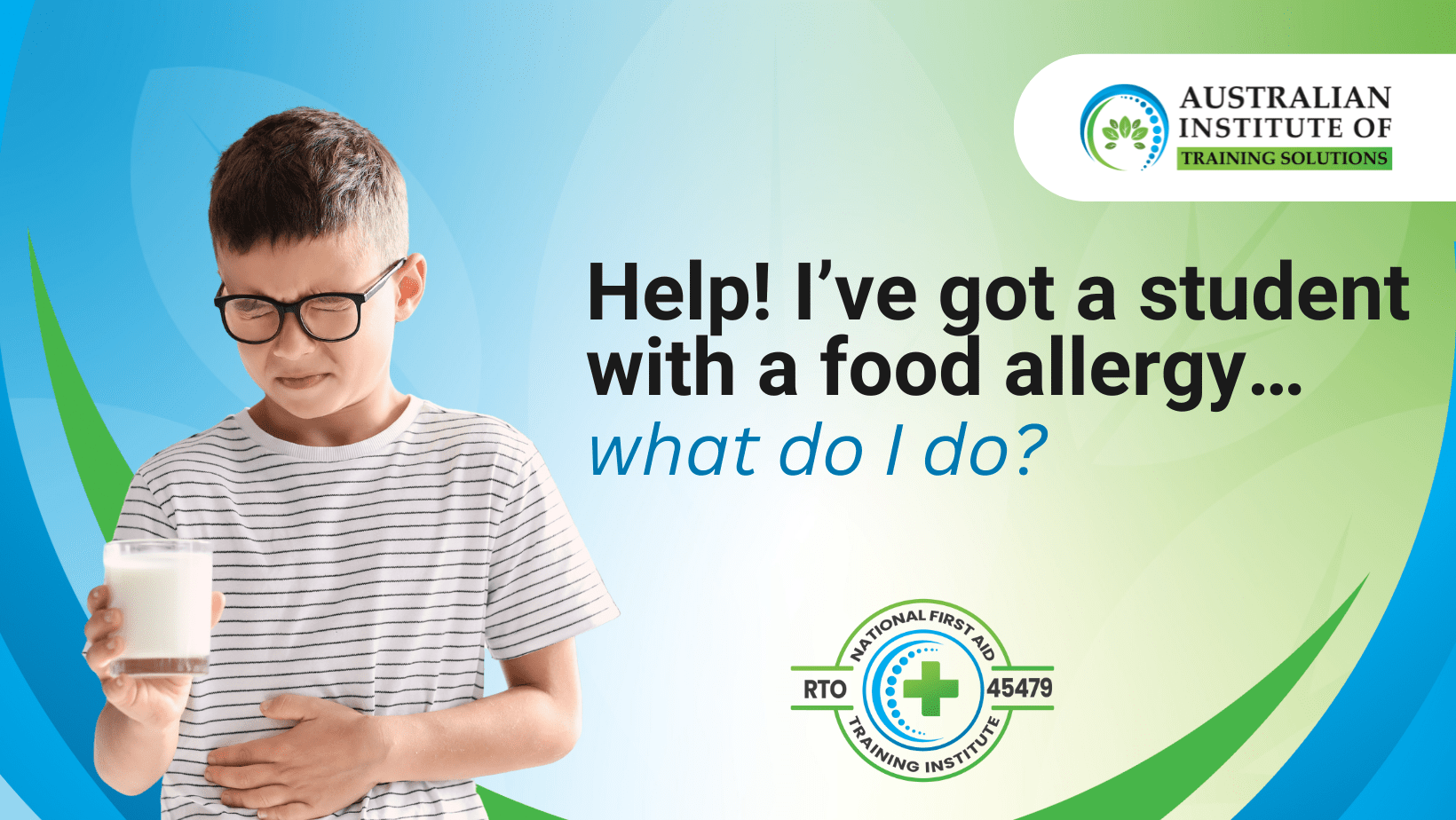
When it comes to potential incidents in a childcare or school setting, food allergies are a big one. Many primary schools across Perth do not allow students to carry nuts in their lunchbox since many people can be allergic and it’s so easy to encounter.
Regardless of precautions taken, there are many other, less common foods that children can be allergic to and come into contact with (such as fish, milk and even sesame). So, knowing how to respond and being prepared for any situation is important.
Your no‑stress teacher guide to managing food allergies at school
First Aid and CPR Training can prepare you for mild reactions such as hives or stomach discomfort, and knowledge of how to administer an EpiPen can save a child in anaphylaxis. But that’s just the beginning of what you can do to prepare and minimise risk in schools and classroom settings.
Develop an Emergency Response Plan
Your Emergency Response Plan should include key procedures and contacts, which is vital information to have on hand if you have students with known allergies in your classroom.
This plan will also include the contact information of nominated First Aiders in your workplace, so one thing you can do is take note of any people near your classroom who have additional First Aid Training and make sure your students are also aware for an emergency situation.
Implement an Allergy Management Plan in your classroom
Another preventative step you can take is ensuring students are aware of allergy risks by educating them on:
- What food allergies are.
- Why some classmates might have special foods or restrictions.
- The importance of not sharing food and washing hands after eating.
- Examples of what symptoms can look like and who to inform if they notice one of their classmates exhibiting these symptoms.
For further protection, you might enforce classroom rules such as:
- Not allowing food to be consumed or exposed within the classroom.
- Not using food-based reward systems for behaviour management.
- Avoiding food-based learning activities (or at least, clearly labelling foods).
Know the difference between an EpiPen and Anapen
Did you know there’s more than one type of EpiPen (and that they both administer slightly differently?)
Both pens administer different amounts of adrenaline, and the Anapen even has an exposed needle after usage. But you won’t always know which one is in the nearest First Aid kit.
When responding to an emergency situation, coming across a different type of EpiPen often stumps people and slows down precious response time. That’s why keeping your training current avoids delays and saves lives by ensuring you feel confident and knowledgeable for any emergency situation.
Our courses run from our convenient South Perth location multiple days and times per week. Book in your training today and know that you can help save a life.
Want more information about our First Aid and CPR training courses for teachers? Email us: admin@aits.edu.au phone 1300 266 408 or text 0461 347 547.